Keep it cold
Store shellfish in the refrigerator and cook it soon after buying.
Shrimp, mussels, clams and scallops cook quickly and reward a little preparation. This guide explains how to handle each one with care and confidence.
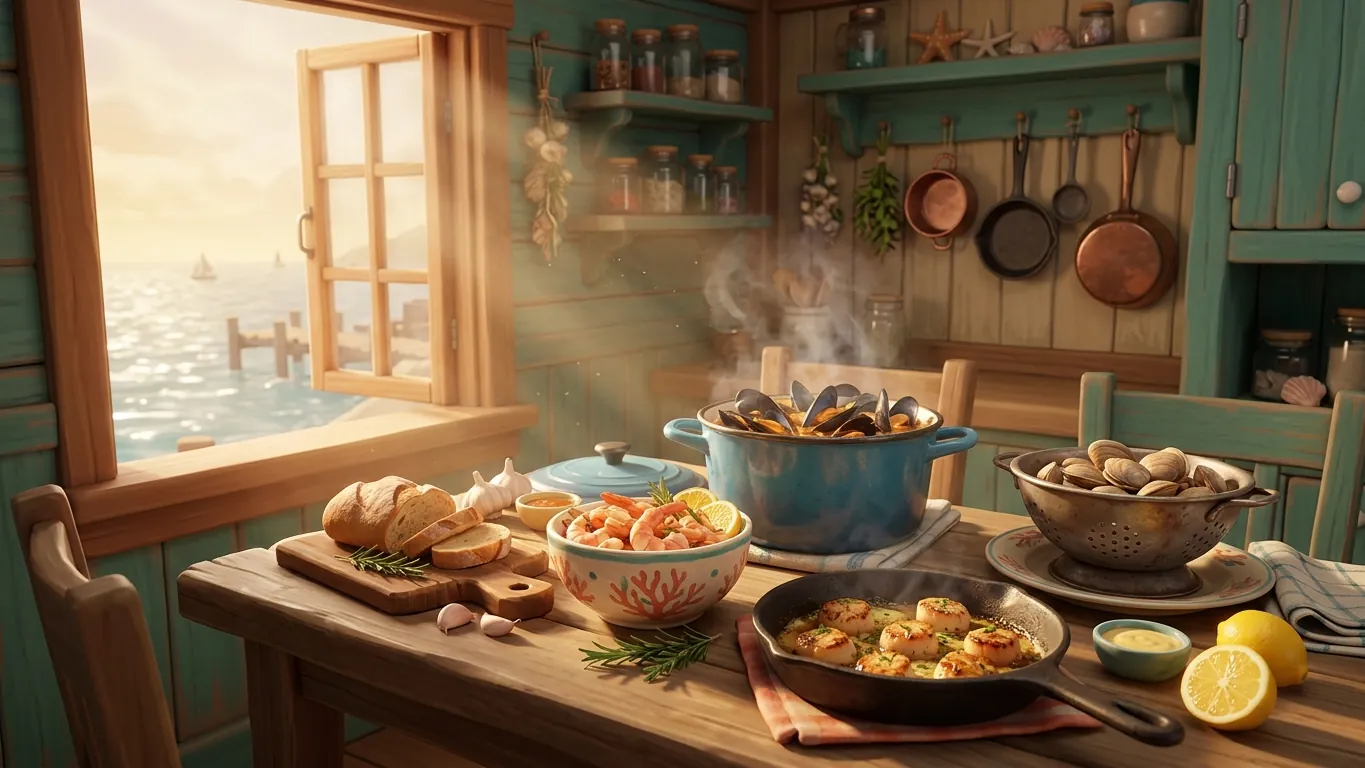
Shrimp is widely available, usually frozen, and comes in many sizes. Sizes are often described by how many shrimp make up a pound, so smaller numbers mean larger shrimp. Shrimp may be sold raw or precooked, shell-on or peeled, and with or without the dark vein along the back.
Raw shrimp cook in just a few minutes. They are done when they turn pink and opaque and curl into a loose C shape; a tight O shape usually means they are overcooked. Shell-on shrimp tend to stay juicier and carry more flavor, especially when grilled or roasted. Peel and devein them before or after cooking, depending on the dish.
To thaw frozen shrimp, place them in the refrigerator overnight or in a sealed bag under cold water.
Mussels and clams are usually sold live. Buy them from a source that keeps them cold and well ventilated, and store them in the refrigerator in a bowl covered with a damp cloth rather than in a sealed bag or water.
Before cooking, rinse them under cold water. Pull off the fibrous beard on mussels. Tap any open shells; those that do not close should be discarded, as should any with cracked or broken shells. Clams can hold sand, so many cooks soak them briefly in cold salted water before cooking.
The classic method is steaming: add a little liquid such as wine, stock or water with aromatics to a wide pot, add the shellfish, cover and cook until the shells open. Commonly accepted practice is to discard any that stay closed after cooking.
Scallops are prized for their sweet flavor and tender texture. Sea scallops are larger and ideal for searing, while bay scallops are small and suit pasta, stews or quick sautés.
The key to a good sear is a dry surface. Remove the small side muscle if present, pat the scallops very dry and season just before cooking. Use a hot pan with a thin layer of oil, place the scallops with space between them and leave them undisturbed until a deep golden crust forms, then turn once. Scallops cook quickly and can turn rubbery if overcooked, so pull them from the pan as soon as they are just opaque through the center.
Shellfish is perishable and deserves careful handling.
Store shellfish in the refrigerator and cook it soon after buying.
Discard live shellfish with broken shells or that do not close when tapped.
Keep raw shellfish away from ready-to-eat food and clean surfaces afterward.
Shellfish is a common allergen; check with guests and consult a healthcare professional about any concerns.
Steamed mussels with a garlic, wine and herb broth are a complete meal with crusty bread. Clams pair naturally with pasta, olive oil and parsley. Seared scallops shine with a little brown butter and lemon, and shrimp works in tacos, salads, stir-fries and grain bowls.
Because shellfish cooks so quickly, prepare everything else first. Have sauces, sides and serving dishes ready, then cook the shellfish at the last moment. For specific food safety questions, especially regarding raw or undercooked shellfish, refer to current official guidance.
 How to swap one fish for another
Can't find the fish your recipe calls for? Learn how to choose a substitute by texture, fat content and thickness, with practical swap ideas.
Read more
 Baking and roasting fish without the guesswork
Learn how to bake and roast fish at home: choosing the right temperature, cooking in parchment, roasting whole fish and keeping fillets moist.
Read more
 Tuna and mackerel: a closer look
An explainer on tuna and mackerel varieties, from albacore and yellowfin to Atlantic and Spanish mackerel, with cooking ideas and balanced safety notes.
Read more