Cod
Haddock, pollock or hake work well in baking, frying and chowders.
Recipes often name a specific fish that may not be available where you shop. Understanding texture, fat and thickness lets you choose a sensible substitute with confidence.
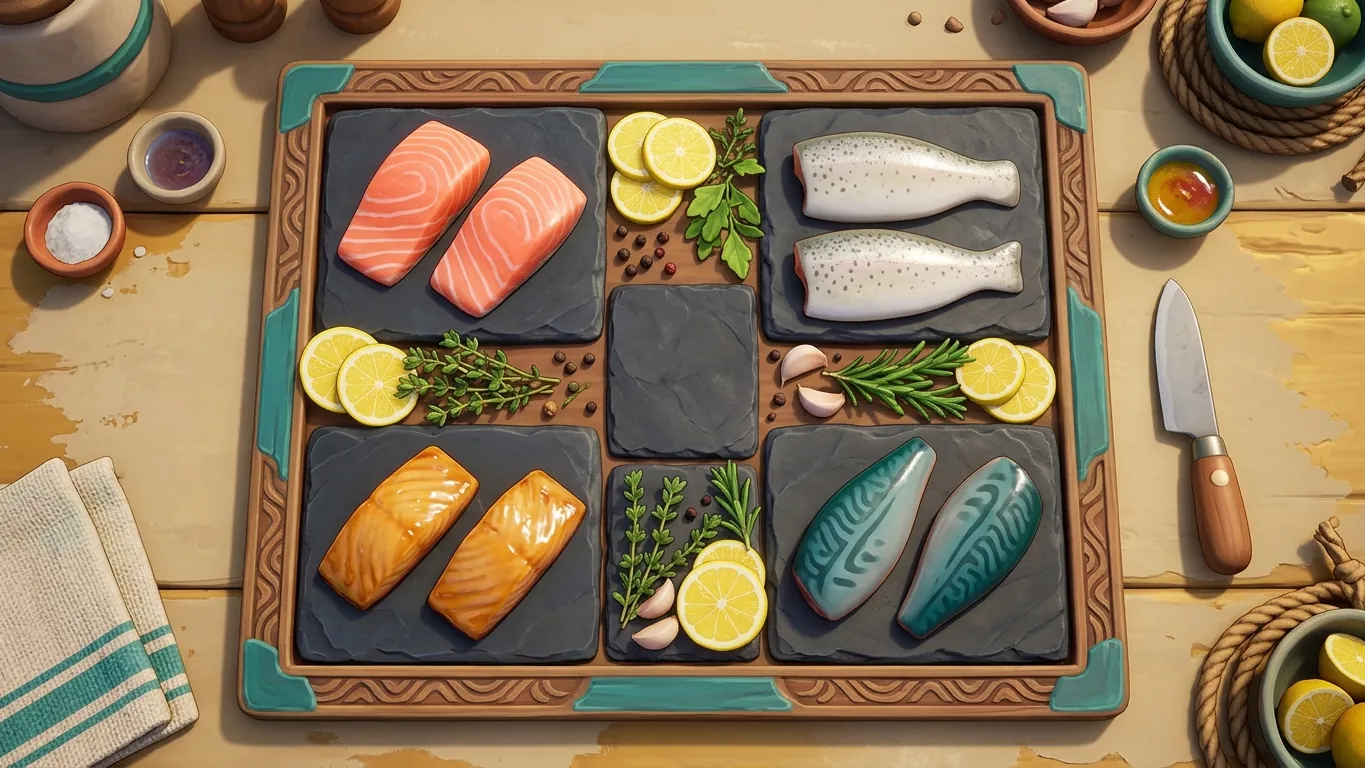
Many fish share similar qualities, so a recipe written for one species can often be cooked with another. Availability changes with season and location, and a substitute may simply be fresher or better suited to your budget. Being flexible also lets you try species you might not otherwise buy.
The trick is to match the qualities that matter most to the recipe. A flaky white fish in a gentle stew is easy to replace with another flaky white fish. A firm, meaty fish on the grill needs a substitute that holds together over high heat.
Texture is usually the most important factor. Fish can be broadly described as delicate, medium-firm or firm and meaty.
Delicate fish, such as sole, flounder and tilapia, have fine flakes and suit quick sautés, baking and steaming. Medium-firm fish, including cod, haddock, snapper, sea bass and halibut, are versatile and hold together better. Firm, meaty fish, such as swordfish, tuna steaks and mahi-mahi, behave more like meat and stand up to grilling and skewering.
If a recipe calls for grilling a firm fish, swapping in something delicate will likely lead to broken fillets. Moving within the same texture group is the safest choice.
Next, think about fat content and flavor intensity. Lean, mild fish can usually replace one another easily. Oily fish such as mackerel, sardines and bluefish have stronger flavors and more fat, so swapping them for lean fish changes the character of a dish.
Within oily fish, there are still useful pairings. Trout and salmon share a similar richness and often cook in comparable ways, though trout is usually thinner and cooks faster. Sardines and small mackerel can often stand in for each other in grilled or broiled dishes.
These are starting points; always adjust cooking time for thickness.
Haddock, pollock or hake work well in baking, frying and chowders.
Thick cod loin or sea bass can replace it in roasting and pan-searing.
Arctic char or trout offer similar richness and color.
Other thin flatfish or tilapia suit quick sautés.
Mahi-mahi or thick tuna steaks hold up on the grill.
Even a well-chosen substitute may differ in size. Thickness affects cooking time more than species does. A common rule of thumb in home cooking is to estimate time by the thickest part of the fillet, then start checking early.
The most reliable approach is to check doneness directly. Look for flesh that has turned opaque and separates gently with a fork, or use a thermometer; US food safety guidance commonly cites 145°F for fish. With these checks in place, substitution becomes much less stressful, and you can follow nearly any recipe with the fish that looks best on the day you shop.
 Baking and roasting fish without the guesswork
Learn how to bake and roast fish at home: choosing the right temperature, cooking in parchment, roasting whole fish and keeping fillets moist.
Read more
 Tuna and mackerel: a closer look
An explainer on tuna and mackerel varieties, from albacore and yellowfin to Atlantic and Spanish mackerel, with cooking ideas and balanced safety notes.
Read more
Why whole fish deserves a place in your kitchen
An opinion piece on cooking whole fish at home: why it is more approachable than it seems, what it teaches about freshness and how to get started.
Read more