Why whole fish deserves a place in your kitchen
Whole fish can seem intimidating, yet it is one of the simplest and most rewarding ways to cook seafood. Here is why we think every home cook should try it.
The fillet habit
In many American kitchens, fish means fillets. They are neat, boneless and quick to cook, and there is nothing wrong with that. But relying only on fillets narrows the range of fish we cook and the ways we enjoy them.
In our view, whole fish is one of the most underused options at the fish counter. It is often treated as something for restaurants or special occasions, when in fact it can be as simple as seasoning, roasting and serving.
Freshness you can see
One of the strongest arguments for whole fish is transparency. With a fillet, you judge freshness mainly by smell and surface. With a whole fish, you can see clear eyes, red gills, shiny skin and firm flesh. These signs make it easier to choose well.
This also builds your confidence. After examining a few whole fish, you start to recognize quality instantly, and that skill carries over to everything else you buy at the counter.
Flavor and forgiveness
Cooking fish on the bone tends to produce moist, flavorful results. The bones, skin and head shield the flesh from direct heat and contribute flavor. A whole fish is also more forgiving of timing than a thin fillet, which can go from perfect to dry in moments.
There is variety in the flesh, too. The thicker back, the tender belly and the cheeks each have their own texture. Eating a whole fish lets you discover these differences in one meal.
Less waste, more possibilities
A whole fish encourages you to use more of what you buy. After serving, the head and bones can be simmered with vegetables and herbs to make a light stock for soups, risottos or sauces. Nothing about this is complicated, and it turns one purchase into two meals.
Whole fish also opens the door to species that are rarely sold as fillets. Smaller fish such as sardines, small mackerel, porgy or whiting are often sold whole and can be both flavorful and approachable.
How to get started
Begin small. A fish of about one to two pounds, such as trout, branzino-sized sea bass or a small snapper, roasts in a home oven without special equipment. Ask the fishmonger to scale and clean it, which most counters will do.
At home, dry the fish, score the skin, season inside and out, add lemon and herbs to the cavity, and roast in a hot oven until the flesh near the bone is opaque. Serve it on a platter and lift the fillets off the bone at the table. Watch for small bones while eating, and take your time.
It may feel unfamiliar the first time. By the second or third, it often becomes one of the easiest dishes in your repertoire. That is why we believe whole fish deserves a regular place in the home kitchen.
Related articles
 Lean vs. oily fish: the difference that shapes every recipe
Understand the difference between lean white fish and oily fish, how each behaves in the kitchen and which cooking methods suit them best.
Read more
 How to choose fresh fish with confidence
Practical tips for judging fish freshness by smell, look and texture, choosing fillets or whole fish, understanding frozen fish and storing it safely.
Read more
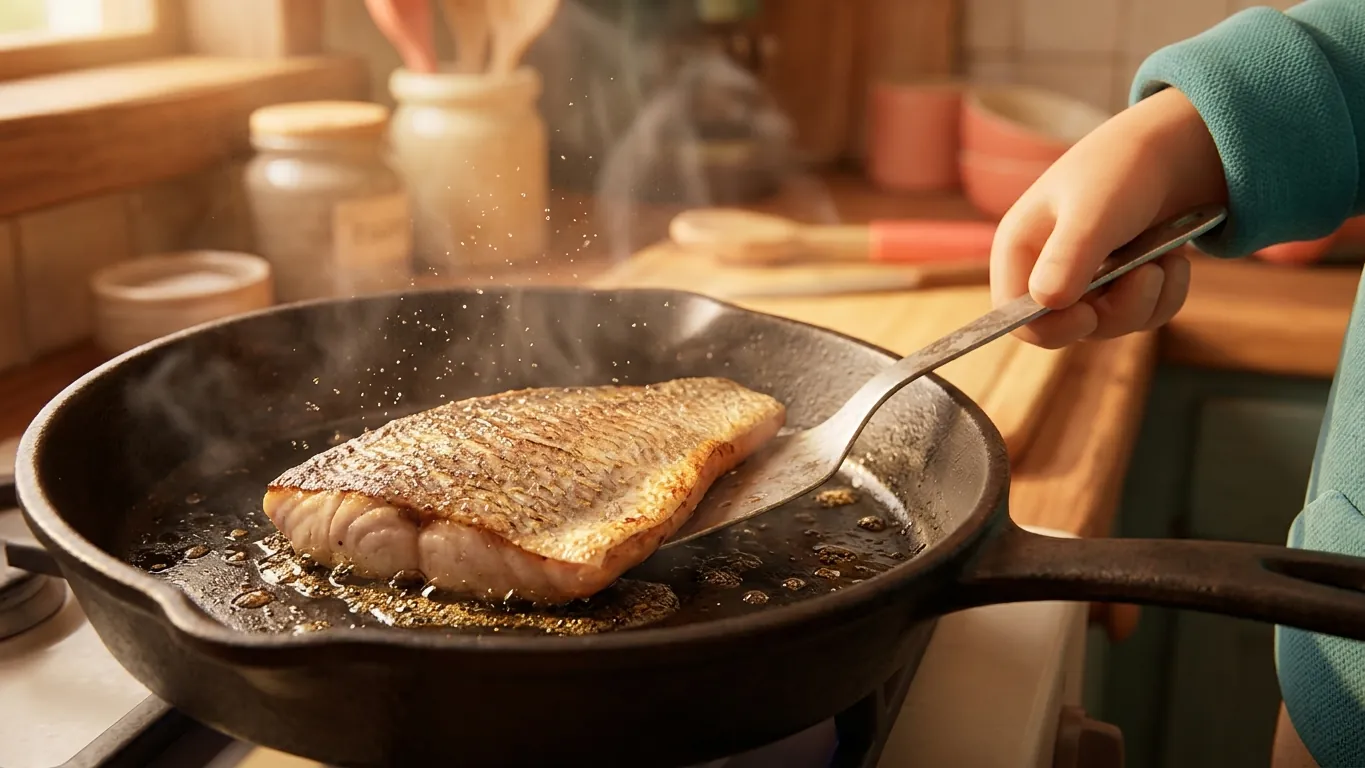 Pan-searing fish fillets for a golden crust
Learn how to pan-sear fish fillets with a golden crust: drying the fish, heating the pan, cooking skin-on or skinless and finishing with a simple sauce.
Read more