How to choose fresh fish with confidence
Buying fish gets much easier once you know what to look for. This guide walks through the simple sensory checks, the choice between cuts and the often overlooked value of frozen fish.

Start with your nose
Smell is one of the most reliable freshness signals. Fresh fish should smell clean and mild, a little like the sea or fresh water. A strong, sour or ammonia-like odor is a sign that the fish is past its best. This applies to the whole display as well: a well-kept fish counter generally does not have an overpowering fishy smell.
Do not be shy about asking to smell a piece of fish more closely. A good fishmonger is used to questions and can tell you when the fish arrived, where it came from and how they recommend cooking it.
A quick checklist at the counter
Use these checks together rather than relying on any single sign.
- 01
Look at the eyes
On whole fish, eyes should be clear and slightly bulging rather than cloudy or sunken.
- 02
Check the gills
Gills should be red or pink and moist, not brown, gray or slimy.
- 03
Press the flesh
Firm flesh that springs back when pressed is a good sign; soft flesh that keeps the dent is not.
- 04
Inspect fillets
Fillets should look moist and translucent, without dry edges, gaps in the flesh or discoloration.
- 05
Look at the display
Fish should be kept cold on plenty of clean ice or in refrigerated cases.
Fillets, steaks and whole fish
Fillets are convenient and cook quickly, but they show freshness less clearly than whole fish, so look carefully at the surface and edges. Steaks, cut across the body of larger fish such as salmon, halibut or swordfish, are sturdy and work well on the grill.
Whole fish give you the most information. You can check the eyes, gills and skin, and the bones and head add flavor when cooking. Many fish counters will scale, gut and even fillet a whole fish for you if you ask. If you are new to whole fish, choose a smaller one, such as a branzino-sized fish or a trout, which roasts quickly and fits easily in a pan.
Understanding frozen fish
Frozen fish is often a practical choice, especially if you live far from the coast. Many fish are frozen soon after being caught, which helps preserve their quality. In fact, some fish labeled as fresh at a counter may have been previously frozen and thawed, so it is always worth reading labels or asking.
When buying frozen fish, look for packages that are solidly frozen, without large ice crystals or signs of thawing and refreezing. Vacuum-sealed portions are convenient. To thaw, the gentlest method is overnight in the refrigerator. For faster thawing, place the sealed fish in cold water. Avoid leaving fish to thaw on the counter at room temperature.
Getting it home safely
Fish is perishable, so plan to buy it near the end of your shopping trip. If the trip home is long, an insulated bag with an ice pack helps keep it cold. Once home, store fish in the coldest part of the refrigerator and cook it soon, ideally within a day or two for fresh fish. If you will not cook it in time, freeze it while it is still in good condition.
Keep raw fish separate from ready-to-eat foods, and wash hands, boards and knives after handling it. For detailed storage times and temperatures, consult current official food safety guidance.
Related articles
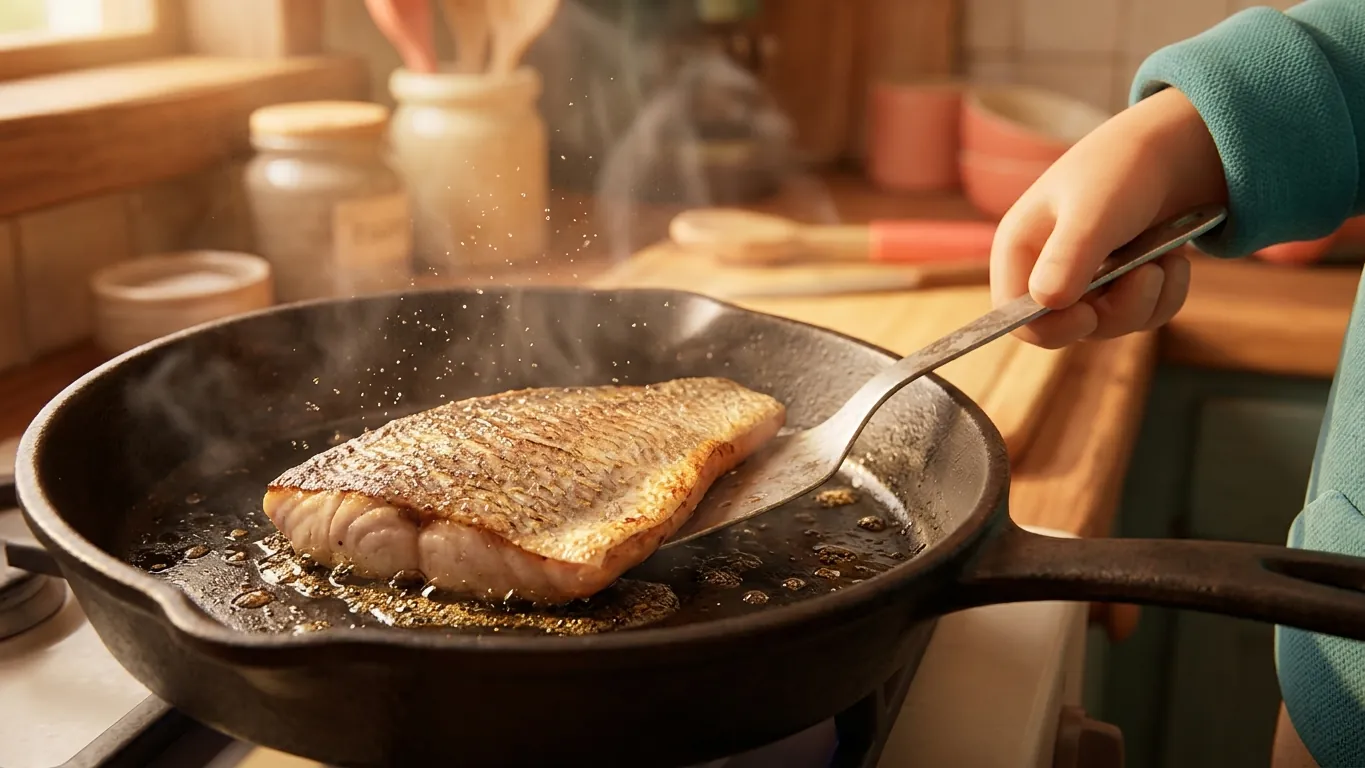 Pan-searing fish fillets for a golden crust
Learn how to pan-sear fish fillets with a golden crust: drying the fish, heating the pan, cooking skin-on or skinless and finishing with a simple sauce.
Read more
 Salmon varieties explained
A clear look at common salmon varieties, including king, sockeye, coho, pink, chum and Atlantic, with notes on flavor, texture and cooking.
Read more
 Cooking shellfish at home
A practical guide to buying, cleaning and cooking shrimp, mussels, clams and scallops at home, with food safety notes and simple serving ideas.
Read more