Pan-searing fish fillets for a golden crust
Pan-searing is one of the quickest ways to cook fish, and a few simple habits make the difference between a crisp crust and a stuck, broken fillet. Here is how to approach it calmly and consistently.
Why pan-searing is worth learning
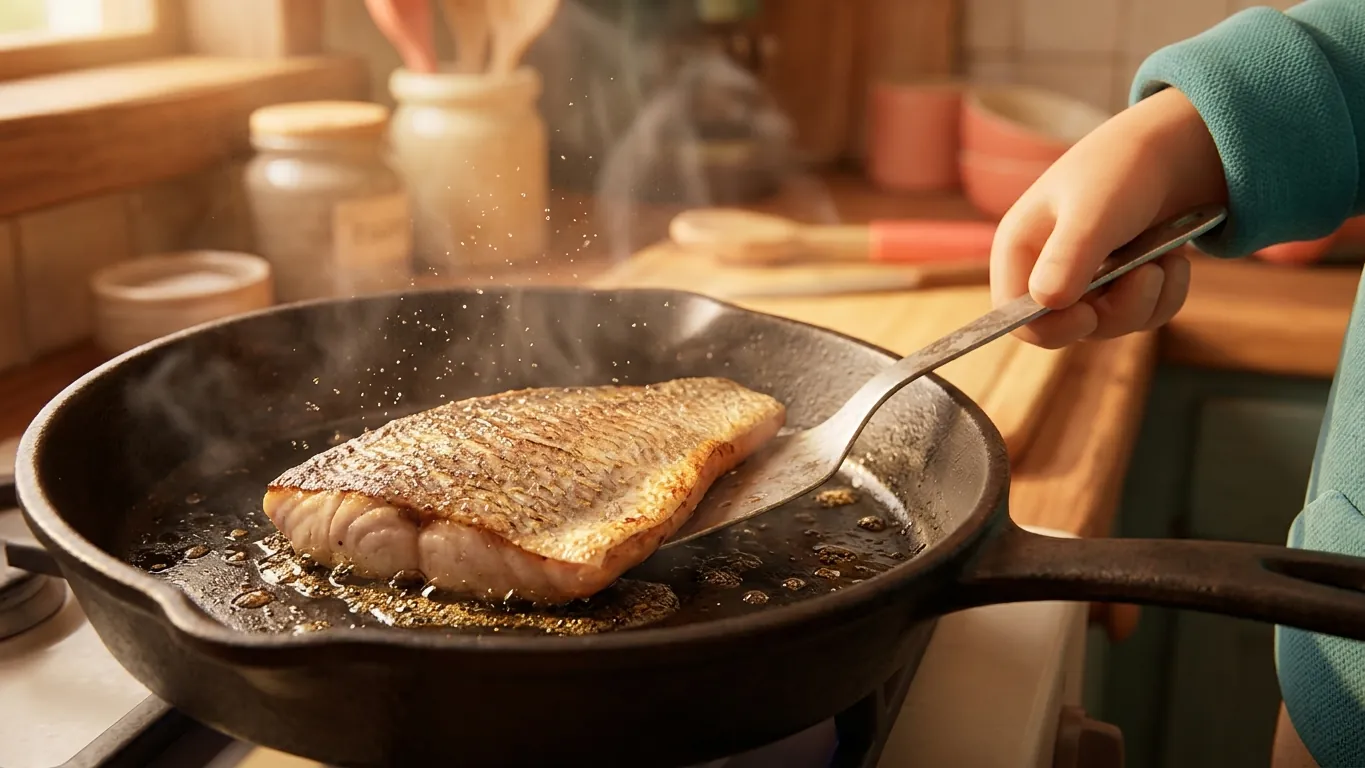
Pan-searing gives fish a browned, flavorful surface while keeping the inside moist. It needs only a pan, a little fat and a few minutes, which makes it ideal for weeknight cooking. It also works with a wide range of fish: salmon, trout, sea bass, snapper, cod, halibut and many others.
The technique relies on direct contact between the fish and a hot surface. When the surface is dry and the pan is hot enough, the proteins brown quickly and naturally release from the pan. Most problems, such as sticking or pale, soggy results, come from moisture or a pan that is not hot enough.
Dry fish, hot pan
Take the fish out of the refrigerator a little before cooking so it is not ice cold, then pat it thoroughly dry with paper towels on all sides. Moisture on the surface turns into steam, which prevents browning. Season with salt just before cooking.
Choose a heavy pan that holds heat well, such as stainless steel or cast iron. Nonstick pans are also forgiving, especially for delicate fish. Heat the pan over medium-high heat before adding a thin layer of oil with a fairly high smoke point. The oil should shimmer but not smoke heavily. Do not crowd the pan; leave space between fillets so they sear rather than steam.
Step by step
A simple sequence that works for most fillets about an inch thick.
- 01
Prepare
Pat the fillets dry, season with salt and have a thin, flexible spatula ready.
- 02
Heat
Warm the pan over medium-high heat, then add oil and let it shimmer.
- 03
Lay away from you
Place each fillet in the pan by laying it away from you to avoid splatters, presentation side or skin side down.
- 04
Leave it alone
Let the fish cook undisturbed until the edges turn opaque and the fillet releases easily, usually a few minutes.
- 05
Flip and finish
Turn once and cook briefly on the second side until done. A thermometer reading of 145°F is the commonly cited US guideline for fish.
Skin on or skin off
Skin-on fillets are excellent for searing because the skin protects the flesh and turns crisp. Before cooking, scrape the skin with the back of a knife to remove excess moisture, then dry it well. Cook skin side down for most of the cooking time, pressing gently with the spatula for the first few seconds so the fillet does not curl.
Skinless fillets work too. Sear the side that looked best at the counter first, since it will be the side facing up on the plate. Thin skinless fillets, such as sole, cook very quickly, so you may only need to flip briefly or baste them with fat instead of turning them over.
Finishing touches
Once the fish is nearly done, you can add a knob of butter, a crushed garlic clove and a few herbs to the pan, then spoon the foaming butter over the fillet. Move the fish to a warm plate and use the pan for a quick sauce: a squeeze of lemon, a splash of white wine or stock, and perhaps some capers.
Serve pan-seared fish right away while the crust is crisp. Simple sides such as greens, roasted potatoes or rice let the fish stay at the center of the plate. With practice, you will learn to read the color and feel of each species, and the method will become second nature.
Related articles
 Salmon varieties explained
A clear look at common salmon varieties, including king, sockeye, coho, pink, chum and Atlantic, with notes on flavor, texture and cooking.
Read more
 Cooking shellfish at home
A practical guide to buying, cleaning and cooking shrimp, mussels, clams and scallops at home, with food safety notes and simple serving ideas.
Read more
 How to swap one fish for another
Can't find the fish your recipe calls for? Learn how to choose a substitute by texture, fat content and thickness, with practical swap ideas.
Read more